What is Vibroacoustic Therapy: How it works, who it’s for, and how it helped me
What is Vibroacoustic Therapy: How it works, who it’s for, and how it helped me
By Melissa Tudor
Certified VAT practitioner
Resonate Sound Spa, Seattle, WA
Vibroacoustic therapy isn't new. Scientists have been studying this treatment technique for decades. Today, it’s gaining new attention as one of the most effective ways to help the body move from a “fight-or-flight” state to a “rest-and-digest” state.
Vibroacoustic therapy is a sound-based wellness technique that uses low-frequency vibrations to stimulate the whole body from within – your organs, tissues, and cells – to reduce stress and anxiety, relieve pain, and calm the nervous system.
The following is an easy-to-understand guide on how Vibroacoustic therapy works, the science behind it, who it’s for, and how it helped me.
What Is Vibroacoustic therapy?
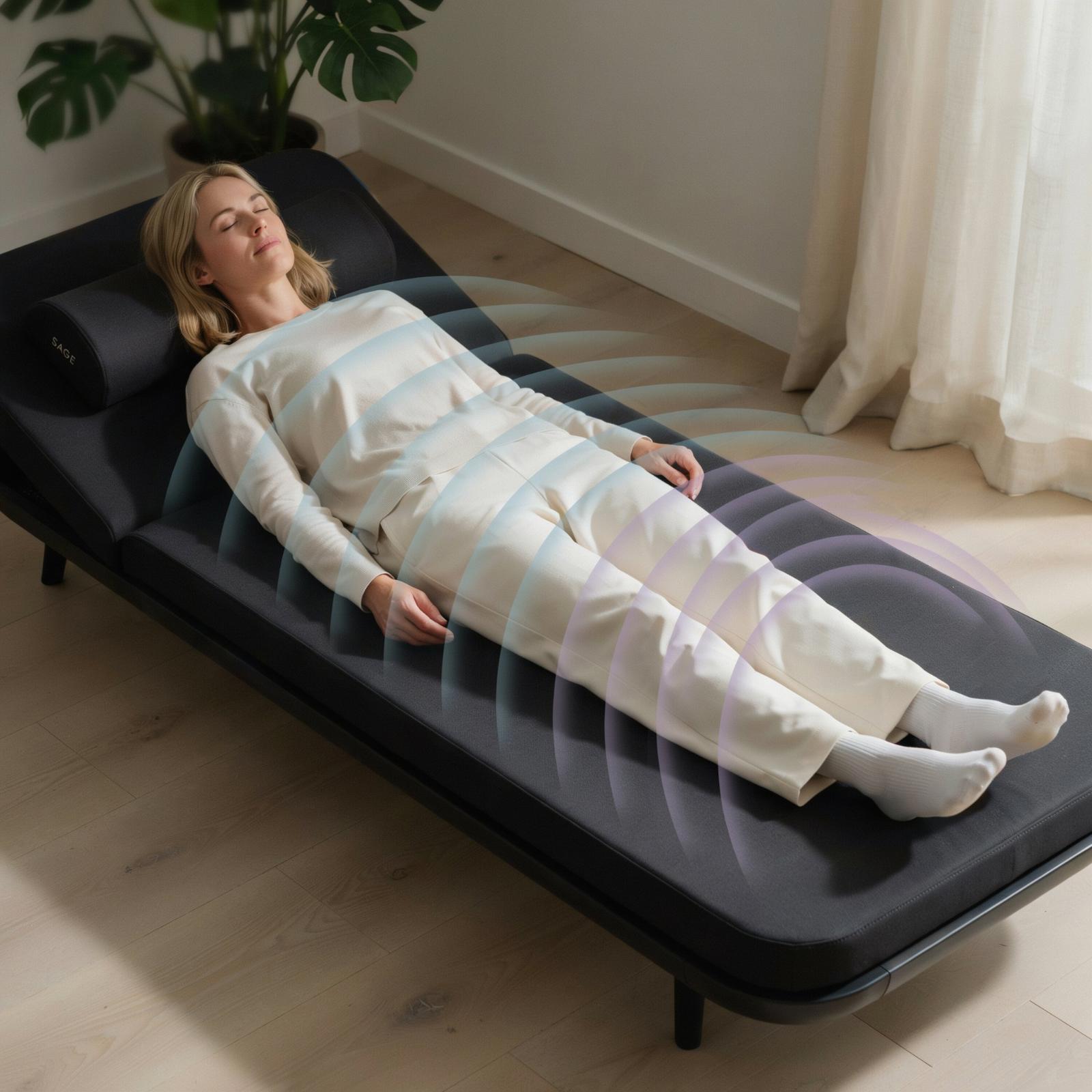
Vibroacoustic therapy – or VAT for short – is a sound-meets-science application of low-frequency sound vibrations transferred directly to your whole body through specialized devices, such as beds, mats, tables or chairs. These devices have embedded transducers that convert audio signals (sound/music) into physical vibrations you can feel throughout your entire body.
VAT operates on two paths simultaneously. You hear the tones or music, and you feel the vibrations resonating through the surface beneath your body – stimulating your muscles, tissue, fascia, and bones.
This individualized, bimodal stimuli delivery technique is what makes VAT fundamentally different from a sound bath, which involves listening to someone playing calming instruments, like singing bowls, while lying on a mat in a room with others.
The modern application of VAT was developed in the 1980s by Norwegian researcher Olav Skille. He had been studying VAT since the 1960s, observing measurable relaxation responses in children with severe disabilities when they lay on vibrating surfaces while music played.
Over the following decades, clinical research expanded to include anxiety, depression, chronic pain, fibromyalgia, multiple sclerosis, Parkinson’s disease, sleep disorders, autism spectrum disorder, trauma recovery, and, recently, weight loss.
At Resonate Sound Spa, located in Seattle’s Fremont neighborhood, we offer VAT sound beds, and a certified VAT practitioner guides every session. Our practitioners help you select the specific frequency level based on your wellness goals – whether that is stress reduction, pain relief, sleep support, physical recovery, or nervous system reset.
VAT is not a passive playlist, a spa treatment, a sound bath, or a guided meditation. VAT is a clinically researched, targeted therapeutic technique built around you, your needs, and your wellness goals.
My story and how Vibroacoustic therapy helped me
I wasn’t thinking about starting my own business a year ago. But after my ninth corporate layoff in 30 years, I needed to try something different. The economic landscape was changing due to AI and economic forces, and I wasn’t sure there was a job for me in the corporate world.
As a busy mom, partial caregiver to my parent with stage 4 cancer, and manager of my family’s household, I was beat.
And then I found Vibroacoustic therapy - or rather, Vibroacoustic therapy found me.
I’ll never forget my first session. I was actually nervous to try it! The testimonials told me that it was an incredible experience, possibly life changing. The science told me that it could reduce symptoms of my perimenopause, including brain fog, insomnia, and anxiety. The ads told me that it could do all of that and more. What was in store for me?
When my first session started, the only thing I noticed was the sound, the vibrations, and the immediate relief. I began to feel replenished. My energy and inner peace returned.
When it ended, I felt completely centered. I knew then that this was something that almost anyone could benefit from. When I learned that this wasn’t being offered as a service in Seattle, the inspiration for Resonate Sound Spa was born.
I opened Resonate Sound Spa in July 2025 with two commercial sound beds in the heart of Seattle’s Fremont neighborhood. We offer a variety of sessions and membership packages, including our New Client Package: $140 for two sessions.
How does Vibroacoustic therapy work?
Vibroacoustic therapy uses low-frequency sound waves to trigger multiple healing responses in your body. As these vibrations travel through your muscles and tissues, they physically and neurologically stimulate your system, helping you deeply relax and recover.
Here’s what happens during a session as the sound waves move through your body:
Cellular massage: The rhythmic vibrations pass through your skin, muscles, and fascia, acting as a deep, soothing massage at the cellular level.
Nervous system reset: The tactile input calms your body’s “fight-or-flight” response, shifting you into a parasympathetic “rest-and-digest” state.
Pain and tension relief: The sound waves stimulate specialized touch receptors, which help interrupt chronic pain signals and relax tight muscles.
Improved circulation: The gentle oscillations help widen blood vessels and lymphatic pathways, boosting blood flow and circulation.
VAT uses low-frequency vibrations – typically between 30 Hz and 120 Hz – transmitted through a sound bed (or other specialized device), penetrating deep into the body to reduce stress, relieve pain, improve mobility, or increase circulation.
What’s happening in your brain and nervous system during a session?
The brain: The vibrations travel up the spinal cord to the brain, directly influencing both emotional processing and brainwave activity. Low-frequency sound physically encourages the brain to synchronize its electrical rhythms with vibration, a phenomenon sometimes called brainwave entrainment. Lower frequencies – in the theta ranges (4-8 Hz) – are associated with deep rest and restorative sleep states. Higher gamma frequencies (40 Hz) have attracted significant research attention for their association with cognitive clarity and potential neuroprotective effects.
VAT uses low-frequency sound as a communication channel between the body and brain.
The nervous system: It acts as a translator, turning mechanical vibrations into therapeutic neurological signals. By bypassing mental chatter, the vibrations penetrate muscle tension and tissue rigidity. The nervous system receives sensory input and signals tight muscles to soften and relax.
VAT helps your nervous system shift from “fight-or-flight” (sympathetic state) to “rest-and-digest” (parasympathetic state).
Chronic stress keeps the sympathetic nervous system in a sustained state of activation, leading to elevated cortisol levels. Your muscles stay tight. Digestion slows. Sleep suffers. Pain threshold drops. Concentration breaks.
VAT activates the parasympathetic nervous system, “the rest-and-digest” state, by giving the body a sustained, low-frequency signal that it interprets as safe. This “safe” state is a physiological process that allows the body to recover, lowering cortisol levels, relieving muscle tension, and creating conditions for better sleep.
The vagus nerve: It plays a key role as the primary communication pathway between the brain and major organs such as the heart, lungs, and gut. It’s the central regulator of the parasympathetic response (“rest-and-digest” state). Research shows that low-frequency vibrations mechanically stimulate the vagus nerve, activating the parasympathetic nervous system, helping to decrease cortisol and adrenaline, slow heart rate, and lower blood pressure to reverse a chronic “fight-or-flight” response.
VAT requires no thinking. The bed and frequency do the work. All you have to do is lie on the bed.
What are the benefits of Vibroacoustic therapy?
The literature on vibroacoustic therapy spans several decades and multiple clinical populations. Here’s what the research currently supports.
Anxiety and chronic stress reduction: Multiple studies have documented significant reductions in self-reported anxiety following VAT sessions. The physiological explanation is consistent: parasympathetic activation reduces cortisol and shifts the body out of a sustained sympathetic response (“fight-or-flight”). For people living with generalized anxiety, occupational burnout, or stress that has become structural rather than situational, VAT offers a way to reset the nervous system that doesn’t require any cognitive effort. You don’t have to try to relax. Your nervous system responds to the frequency on its own.
Sleep quality improvement: When the sympathetic nervous system remains elevated at bedtime, sleep onset is delayed, and restorative deep sleep is reduced - no matter how many hours you spend in bed.
VAT’s demonstrated capacity to shift nervous system state toward parasympathetic “rest-and-digest” makes it a physiologically sound intervention for sleep dysfunction. People who use VAT consistently report improvements in sleep onset, sleep depth, and morning energy. These outcomes align directly with the physiological shifts measured during sessions.
Chronic pain relief: The analgesic effects of low-frequency vibration have been documented in research involving fibromyalgia, chronic lower back pain, and musculoskeletal conditions. Benefits from VAT include reduced muscle tension, improved local circulation, and modulation of pain signal transmission in the central nervous system. VAT is not a cure for chronic pain conditions. The evidence supports meaningful symptom management as part of a broader care approach – and for people who have exhausted pharmaceutical and manual therapy options, it is not a small thing.
Neurological support: VAT has been studied in people living with multiple sclerosis, Parkinson’s disease, and dementia-related conditions, with documented benefits including reduced spasticity, improved balance, and decreased agitation. MIT researchers have discovered that exposing the brain to 40 Hz sensory stimulation (lights, sound, and tactile vibration) reduces Alzheimer’s disease pathology. This therapy helps clear toxic amyloid and tau proteins, protecting neurons and preserving cognitive function.
Scientists are currently studying the broader application of 40 Hz gamma stimulation.
What is a session at Resonate Sound Spa like?
When you arrive at Resonate Sound Spa, you will meet with one of our certified VAT practitioners to discuss what brought you in, what condition or health issue you want to target, and how you want to feel when you leave.
This conversation guides your session.
You then enter one of our private sound bed studios and settle into the sound bed fully clothed — socks on, but shoes off. We recommend wearing comfortable clothing. Our sessions run 60 minutes, with time on the sound bed averaging between 23 and 33 minutes depending on the program selected for your needs.
You can listen to music with or without headphones, or opt for no music at all, just the sound of the vibrations. You can also opt for light therapy, aromatherapy, and a weighted blanket. It’s up to you how you want to experience your session.
When your practitioner starts your session and leaves the room, all you need to do is lie still and let the sound and vibrations do their work. Most people notice physical relaxation within the first five to 10 minutes – a warmth moving through the body, a release in the chest or shoulders, and a quieting of mental chatter.
Afterward, many people report feeling noticeably calmer, at ease, and more physically mobile.
Can anyone use Vibroacoustic therapy?
Vibroacoustic therapy is safe for most people. It may not be appropriate for people with some conditions (more on that below).
VAT is a good fit if you recognize yourself in the following:
You can’t turn off your brain: You experience anxiety, racing thoughts, chronic stress, and exhaustion. These are the most common reasons people come to Resonate Sound Spa. VAT gives your nervous system a physical rather than a cognitive reset. The frequency works whether your mind is quiet or not.
You’re managing chronic pain: Whether you are living with fibromyalgia, chronic back pain, arthritis, or another pain condition, VAT offers documented analgesic support without pharmaceutical intervention. It works alongside your existing primary medical care – not in place of it.
Your sleep has deteriorated: If you’re exhausted but wired, you wake up at 3 a.m. and can’t get back to sleep, or you’re going through perimenopause – your nervous system is likely the bottleneck. VAT helps your nervous system relax.
You’re recovering from burnout or trauma: Trauma can leave your nervous system stuck in a dysregulation or imbalanced state. And because your mind and body are deeply connected, this constant stress overload can present as physical pain. The connection between trauma, nervous system dysregulation, and somatic symptoms (physical manifestations of bodily distress, such as pain, fatigue, or weakness) is well-established. VAT is used as a complementary support technique in trauma recovery settings because it does not require verbal processing to be effective. The body can begin to feel safe before the mind catches up.
While VAT is safe for most people, it may not be appropriate for people who have the following conditions:
· Have a history of seizures, epilepsy, or vertigo
· Are pregnant
· Have an implanted electronic device
· Severe heart issues or high or very low blood pressure
· Bleeding disorders, DVT, or blood-clotting disorders
· Chronic inflammation
If you’re unsure whether Vibroacoustic therapy is suitable for your health condition, please consult your medical doctor to discuss whether it’s safe and appropriate for you.
What does the research say?
Vibroacoustic therapy has been studied in clinical settings since the early 1980s, with a growing body of peer-reviewed research spanning many mental and physical health conditions. Here are a few examples of VAT studies and conclusions.
A 2015 study by Lili Naghdi, found that VAT produced significant improvements among 19 women with fibromyalgia. Improvements observed: 80 percent improvement in Fibromyalgia Impact Questionnaire score, 90 percent improvement in Sleep Scale score, and 49 percent improvement in Pain Disability Index score. Patients could sit and stand longer without pain, cervical range of motion tripled, and muscle tone normalized. Seventy-four percent of patients reduced their medication dose, and 26 percent stopped it entirely.
Across chronic pain studies, VAT shows pain reduction and improved functional outcomes with minimal side effects, including this 2018 controlled study by Einly Lim. The study showed VAT was effective in alleviating chronic back pain and shoulder pain and improving functional ability.
In a 2019 study by Gudrun Agusta Sigurdoardottir, VAT used as an add-on treatment along with standard care accelerated symptom improvements among people with clinical depression.
This 2021 assessment of VAT for physical and mental ailments show that VAT promotes relaxation and reduces anxiety for people experiencing general stress and anxiety while improving mood immediately after a session.
What does the evidence say about these key benefits?
Anxiety and stress: Controlled studies have demonstrated significant reductions in anxiety measures following VAT sessions, with effects attributed to autonomic nervous system regulation and parasympathetic activation.
Chronic pain: Research involving fibromyalgia and musculoskeletal pain conditions has shown measurable reductions in self-reported pain levels and improved quality of life following regular VAT sessions.
Neurological conditions: Studies examining VAT for Parkinson’s disease and multiple sclerosis have documented improvements in spasticity, balance, and quality-of-life measures.
Sleep: Emerging research supports VAT’s role in improving sleep quality by modulating the nervous system state and influencing brainwave frequency.
Overall, VAT is a safe, non-invasive, drug-free approach to therapeutic healing. VAT is not a primary medical treatment – meaning it’s not a cure for diseases and conditions. The scientific research shows that VAT is an effective complementary therapy tool for pain management, anxiety and stress, sleep support, and relaxation.
FAQs
Q: What are the three types of sessions offered at Resonate Sound Spa?
A: We offer traditional, contemporary, and custom sessions based on your needs and desired experience.
Q: How often can I do Vibroacoustic therapy?
A: You can do VAT up to once per day, ideally with at least 24 hours between sessions.
Q: Do I need to tip my certified VAT practitioner?
A: No. Resonate Sound Spa has all-inclusive pricing, and tips are not expected.
Q: Is Vibroacoustic therapy the same as a sound bath?
A: No – and the difference is significant. A sound bath involves someone playing instruments, like singing bowls and chimes, in a room with others. You receive the sound through your ears, and it is an auditory experience. Vibroacoustic therapy is a physical and auditory experience that transmits sound waves directly to the whole body, experienced in a personalized, private setting. Both have value, but they offer different physiological effects.
Q: How is Vibroacoustic therapy different from massage?
A: Massage addresses tension through manual manipulation of tissue. Vibroacoustic therapy addresses the nervous system state through sound frequencies transmitted throughout your whole body – without physical touch. Our practitioners don’t apply pressure to your body during a session; they help you settle in and start the sound bed. Many people find that VAT reaches a depth of release that manual massage cannot access, particularly for tension rooted in chronic nervous system activation rather than localized muscular tightness. The two complement each other well, and many of our clients use both.
Q: Is Vibroacoustic therapy safe?
A: VAT is a safe, non-invasive therapeutic treatment technique. There are no known significant adverse effects associated with properly delivered sessions. There are some contraindications where VAT is not advised – including pregnancy, active cardiac devices, and certain acute conditions. Our practitioners will review these with you during your intake conversation. All new clients must complete a brief medical history form before their first session.
Q: Will it work for me?
A: Many people notice a meaningful shift in their nervous system state after a single session. Lasting changes in anxiety levels, sleep quality, or chronic pain management typically develop over a series of sessions. Most people find that it takes three to five sessions to establish a new baseline, followed by regular ongoing sessions to maintain and strengthen the results. Your practitioner will discuss a recommended session cadence based on your goals during your initial intake conversation.
Q: Can I use my HSA or FSA for Vibroacoustic therapy at Resonate?
A: Yes. Resonate Sound Spa supports HSA and FSA payments through our partnership with Flex, making your sessions eligible wellness expenditures with pre-tax dollars. If you’re unsure about your health plan’s eligibility, we recommend confirming with your insurance provider or your employer. We’re happy to provide documentation to support your reimbursement request.
Q: What should I wear?
A: Comfortable clothing – what you would wear to a yoga class or a relaxed medical appointment. You remain fully clothed, including socks, throughout the session. We ask that you remove your shoes before settling onto the sound bed. Loose layers work well, as the experience can shift between warm and cool as your circulation responds to the vibrations.
Ready to explore Vibroacoustic therapy?
Whether you’re experiencing chronic pain, stress, sleep issues, or simply looking for a deeper whole-body nervous system reset, our team would like to talk to you.
Our practitioners will guide you through your first session and help you choose the right type of session and frequency level to support your wellness goals.
BOOK YOUR NEW CLIENT PACKAGE SESSION
Questions before you book? Reach us at 206-843-4255 or info@resonatesoundspa.com
Resonate Sound Spa is Seattle’s only dedicated Vibroacoustic therapy spa, where science-backed sound therapy meets deeply personalized care. We invite you to book a session and “Feel the Frequency.”